From Fans to Founders: How Remix Culture Is Minting the Next Wave of Original Artists
The Copy That Became the Original
Somewhere between the thousandth fan fiction posted to Archive of Our Own and the ten-millionth YouTube cover of a Fleetwood Mac song, something quietly shifted. The line between "inspired by" and "wholly original" got blurry in the best possible way. And the artists who grew up on that blurry line? They're not embarrassed about it. They're building careers on it.
Remix culture — the sprawling, often legally murky universe of fan fiction, mashups, cover bands, sample-heavy music, and derivative visual art — has spent decades being dismissed as the creative equivalent of a photocopier. But that framing misses something fundamental about how artistic voices actually develop. Nobody arrives fully formed. Every original artist is, in some sense, a remix of everything they ever loved.
"I Learned to Write by Finishing Other People's Stories"
Take Dani Reyes, a 29-year-old fiction writer based in Chicago who published her debut novel last year with a small indie press. Before she was a novelist, she was a prolific fan fiction writer — spending her teens and early twenties posting stories in the Avatar: The Last Airbender fandom. She had tens of thousands of readers before she ever tried to write something "original."
"Fan fiction taught me everything," she says, without a hint of defensiveness. "Pacing, dialogue, how to build tension, how readers respond emotionally to certain beats. I had this immediate feedback loop — people commenting chapter by chapter, telling me what worked and what didn't. What MFA program gives you that?"
Reyes is quick to point out that her novel shares almost nothing with the source material that trained her. Different characters, different world, different themes. But the craft? That came directly from thousands of hours writing within someone else's sandbox.
This is the part remix culture critics tend to skip over: the sandbox isn't the destination. It's the training ground.
Sampling Isn't Stealing — It's a Conversation
In music, the remix debate gets thornier, mostly because of money. Copyright law in the US has historically treated sampling as theft rather than transformation, a legal framework that's done real damage to hip-hop, electronic music, and countless other genres built on the practice of chopping, flipping, and rebuilding existing sounds.
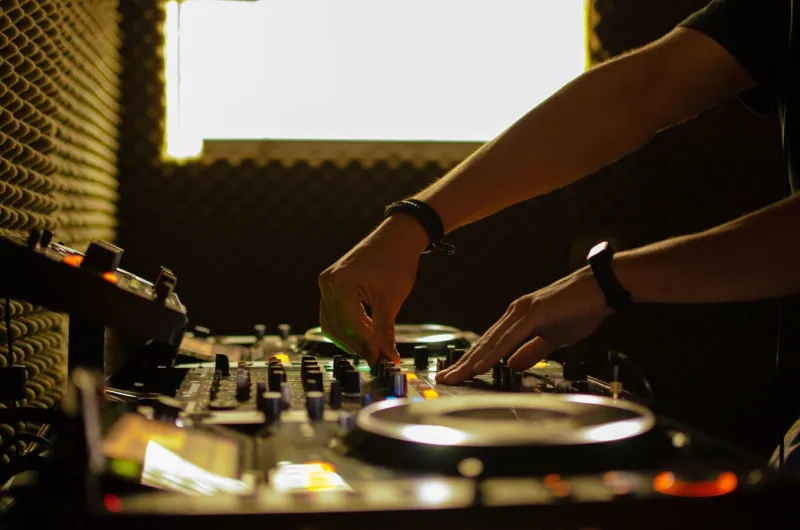
But ask the artists themselves and you get a different story. DJ and producer Marcus Webb, who goes by Westbound in the Chicago beat scene, describes sampling as "a dialogue across time."
"When I sample a James Brown drum break, I'm not stealing James Brown," he says. "I'm referencing him. I'm saying, this thing he made in 1970 is still alive and relevant and worth hearing in 2024. That's not disrespect. That's the opposite of disrespect."
Westbound's latest project layers samples from soul records, field recordings from his grandmother's neighborhood in Mississippi, and original instrumentation into something that sounds like nothing else currently on Bandcamp. The samples are the foundation — but the building is entirely his.
This is what remix culture does at its best. It creates a living archive where the past and present are in constant conversation, and new voices emerge from the friction between them.
Cover Bands and the Myth of the Tribute Act
Ask most people what they think of cover bands and you'll get a polite grimace. "Oh, that's cute." The implication being: real artists make their own stuff.
But spend five minutes with The Retrograde, a Philadelphia-based band that started out playing note-perfect Talking Heads sets and has since evolved into something that sounds like if Talking Heads had grown up listening to Bad Bunny — and that condescension evaporates fast.
"We started as a tribute act because we were obsessed with that era of New York art-punk," says guitarist and co-founder Priya Sandhu. "But the more we played those songs, the more we started asking: what would this band sound like if they were from here, now? And that question completely changed us."
The Retrograde still plays Talking Heads covers occasionally. But their original catalog — built entirely from the muscle memory of inhabiting someone else's creative universe — is where the real work lives. Their last EP got them booked at two major East Coast festivals. Nobody needed to know where it started.
The Community Is the Canvas
What makes remix culture distinct from simple imitation is the communal dimension. Fan fiction writers post to shared archives and respond to each other's work. Mashup artists share stems and stems-of-stems. Cover musicians watch each other's interpretations and push the form further. This isn't solitary genius — it's collaborative evolution.
That community aspect is what makes remix culture feel so at home in the broader landscape of creative collectives and DIY arts scenes that TwoOsTwo has been tracking for years. The remix community is, at its core, a creative community — one with its own norms, its own stars, its own debates about what counts as good work.
And increasingly, it's a community that's producing people who go on to make significant, original contributions to culture. The writers. The producers. The visual artists who spent years in DeviantArt forums drawing other people's characters before developing their own worlds.
Where Does Tribute End and Innovation Begin?
Honestly? Probably somewhere nobody can precisely locate, and that's fine.
The anxiety around remix culture — the legal battles, the discourse about originality, the gatekeeping around what counts as "real" art — often comes from a very old and very shaky assumption: that creativity is a linear thing, that original ideas appear out of nowhere in the minds of solitary geniuses, untouched by influence.
That was never true. Shakespeare borrowed plots. Blues musicians built on field hollers. Abstract expressionists were responding to European modernism. The history of art is a history of remix, and the artists who pretend otherwise are usually the ones who've forgotten where they came from.
What's different now is that the process is visible. Fan fiction is posted publicly. Mashups get uploaded to SoundCloud. The training wheels are on display, and some people find that uncomfortable. But transparency about creative development isn't something to be ashamed of — it's something to celebrate.
The New Original
Dani Reyes, Marcus Webb, Priya Sandhu — none of them are copying. They're continuing a conversation that started long before them and will continue long after. They learned their craft in borrowed worlds, developed their voices in community, and eventually built something that belongs entirely to them.
That's not a lesser origin story. That's just how culture actually works, finally being honest about itself.
The remix revolution isn't a threat to original art. It's where original art is increasingly coming from. And the communities that understand that — that welcome the fan writers and the cover musicians and the sample-flipping producers into the broader creative tent — are the ones producing the most interesting work right now.
Borrowed beginnings. Original futures. Sounds about right.