Steal Like a Scene: Why the Best Creative Communities Run on Borrowed Brilliance
There's a moment in almost every creative community's origin story where someone points at something brilliant happening somewhere else and says, we should do that here. Not copy it exactly. Not rip it off wholesale. Just — do that, but ours.
That moment is where culture actually moves.
The anxiety around creative borrowing is real, and it's not unfounded. Appropriation without credit, aesthetic strip-mining of marginalized communities, the corporate machine laundering underground cool into mass-market product — these are genuine problems, and the creative world has every right to be vigilant about them. But inside the messy, generative world of community-driven art, there's a different kind of borrowing happening. One that's less about taking and more about translating.
The Scene as Living Library
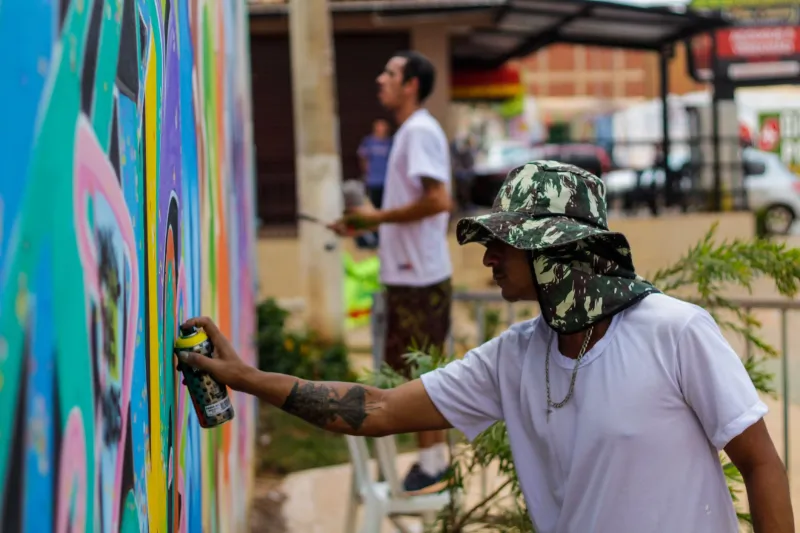
Walk into any thriving local arts scene and you're basically walking into a living archive of influences. The experimental theater troupe in Minneapolis that restructured their whole staging approach after a residency in New York. The Latinx muralist collective in Houston that absorbed techniques from both traditional Mexican public art and the Chicago street art scene, then made something that looks like neither and both. The bedroom producers in Atlanta whose sound references Detroit, Kingston, and Seoul simultaneously.
This is not plagiarism. This is how culture metabolizes.
"Every artist I know is a magpie," says one Chicago-based community arts organizer who works with emerging muralists on the South Side. "We're all picking up shiny things from everywhere and bringing them back to the nest. The nest is what's yours."
The nest is the key part. What makes creative borrowing generative rather than extractive is the community context it lands in — the specific people, place, history, and set of relationships that transform a borrowed idea into something with roots.
When Borrowing Becomes a Practice
Some communities have actually formalized this. The concept of the "open-source aesthetic" — where techniques, visual languages, and structural approaches are explicitly shared as communal resources — has taken hold in a surprising range of American creative scenes.
The Bushwick Open Studios event in Brooklyn, for instance, started as a pretty simple open-door concept borrowed loosely from European artist open-studio traditions. But over time, the participating collectives began building on each other's curatorial ideas year after year, creating a kind of iterative, community-owned format that no single person invented. The event has become something distinctly its own — not because it rejected outside influence, but because it absorbed it and kept moving.
Similar dynamics play out in improv comedy communities, where the "yes, and" principle doesn't just govern stage work — it governs how ideas circulate offstage too. Groups in cities like Chicago, Austin, and Los Angeles have long operated in an ecosystem where structural innovations in show formats, ensemble techniques, and audience engagement get borrowed, adapted, and passed around so freely that origin stories get genuinely hazy. And mostly, people are okay with that.
The Credit Question
Here's where things get more complicated, and more honest.
Borrowing without acknowledgment is still a problem, even among well-meaning creative communities. The difference between a thriving remix culture and a quietly exploitative one often comes down to whether the people whose ideas are being borrowed are in the room — and whether they're being credited, compensated, or at minimum, named.
This matters most when borrowing crosses lines of race, class, and cultural origin. The history of American art is littered with examples of predominantly white, well-resourced communities absorbing the aesthetics of Black, Indigenous, and immigrant artists without returning anything — not credit, not money, not platform. That's not remix culture. That's extraction with a creative veneer.
The communities doing this well are the ones that have built explicit norms around acknowledgment. Not legal frameworks, necessarily, but cultural ones. The kind where you say in your artist statement who taught you something. Where you bring the person whose technique you borrowed into your workshop. Where you don't just Instagram-caption "inspired by" — you actually tell the story.
"Influence should be a conversation, not a monologue," says one interdisciplinary artist based in Oakland who works across textile, performance, and community installation. "When I borrow something, I want the person I borrowed it from to know. I want them to see what I did with it. That's respect. That's also just more interesting."
What Remix Culture Actually Produces
When creative communities get this right, the results are genuinely exciting.
Look at the wave of hybrid performance forms that have emerged from cities with dense, overlapping arts scenes. Spoken word fused with electronic music. Visual art installations that function as theatrical sets. Dance pieces that incorporate community-sourced oral histories. These aren't accidents — they're what happens when artists are embedded in communities where cross-pollination is expected, even celebrated.
The DIY zine world has operated this way for decades. Formats, layouts, distribution strategies, and even entire editorial concepts circulate through zine fests and mail networks with a kind of cheerful communalism that would baffle the mainstream publishing industry. Nobody's getting rich, so nobody's particularly territorial. The result is an aesthetic ecosystem that's constantly evolving and surprisingly hard to pin down.
The Two-Way Street
The final piece of the puzzle is reciprocity. The healthiest borrowing cultures aren't just generous about giving credit — they're also genuinely porous about receiving influence in return. The collective that freely shares its techniques also shows up to other people's events, buys other people's work, and lets itself be changed by what it encounters.
That two-way openness is what separates a real creative community from a brand. Brands protect their aesthetic. Communities evolve it together.
So yeah — steal from each other. Take that format, borrow that color palette, adapt that workshop structure. Just do it loudly, gratefully, and with your door open. That's not artistic compromise. That's how scenes get built.