Bigger Isn't Broken: How Creative Spaces Grow Without Losing Their Weird
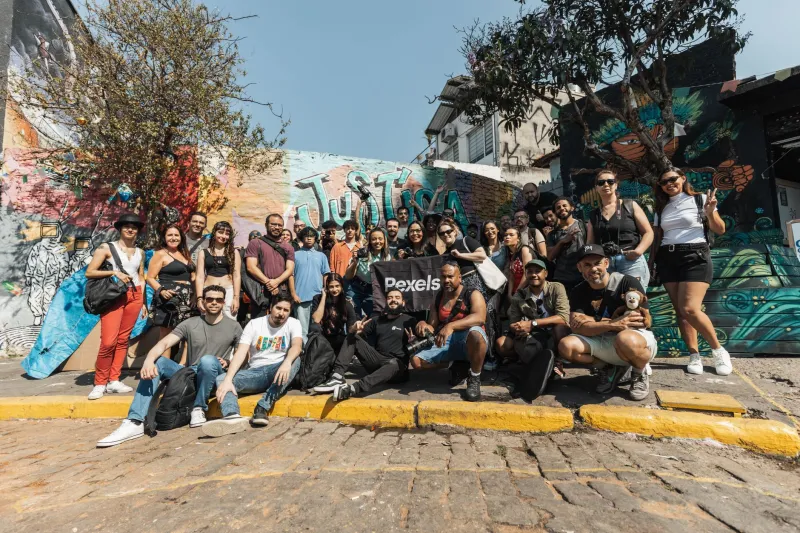
There's a specific kind of grief that hits a creative community right around the time it starts working. The mailing list doubles. The weekend workshops sell out in hours. A local journalist writes a feature that uses the word "vibrant" three times. And somewhere in the back row of the next all-hands meeting, one of the founding members whispers to nobody in particular: this used to feel different.
Growth is supposed to be the goal. But for creative communities — the scrappy collectives, the storefront galleries, the DIY theater troupes, the community arts nonprofits running on borrowed equipment and potluck energy — getting bigger can feel less like a win and more like a slow erasure. The paradox is real: the very things that made people fall in love with your space are often the first casualties of success.
So how do you grow without growing out of yourself?
The Moment the Vibe Becomes a Brand
Here's what usually happens. A small creative community builds something genuinely magnetic — an atmosphere, a set of inside jokes, a culture of risk-taking and radical welcome. Word spreads. New people arrive, drawn by the reputation of that original magic. But those newcomers weren't there for the awkward early years. They didn't help paint the walls or argue about the mission statement at 11pm on a Tuesday. They showed up for the finished product.
That tension — between the founders who built the culture and the newcomers who inherited it — is where most creative communities start to fracture.
The Chicago-based arts collective Chances Dances navigated this for over a decade by building ritual into their expansion. Every new volunteer cohort went through an onboarding process that wasn't just logistical — it was cultural. They told stories. They shared failures. They made sure the origin mythology was passed down like folklore, not filed away in a Google Drive folder nobody opens.
It sounds small. It isn't. Culture doesn't transmit through documentation. It transmits through people who remember, telling people who don't.
Scale Is a Design Problem
Most creative communities don't think about structure until structure becomes a crisis. Things are informal because informality feels like freedom. Decisions happen in hallways. Roles are fluid. That works beautifully at twenty people. At two hundred, it starts to collapse under its own weight — and the people who get crushed are usually the ones who were already doing the most.
The solution isn't to become a corporation. It's to be intentional about which structures you build and why.
Consider what happened with Brooklyn's Interference Archive, a volunteer-run space dedicated to cultural movements and radical history. As their collection and community grew, they made a deliberate choice: formalize the operations, protect the culture. They developed clearer processes for volunteers and cataloging, but kept their programming fiercely experimental and community-driven. The back-end got more organized. The front-end stayed beautifully weird.
That distinction — between the scaffolding and the soul — is one of the most useful frameworks any growing creative community can adopt. You can have a functional budget spreadsheet and a commitment to putting strange, uncommercial art in front of people who didn't know they needed it. These things are not in conflict. They just require you to know which is which.
The Danger of the Origin Story
Here's a counterintuitive problem: sometimes creative communities get so attached to who they used to be that they accidentally prevent who they could become.
There's a version of "keeping it weird" that's actually just nostalgia wearing a leather jacket. When longtime members gatekeep the culture — when new voices are subtly discouraged, when "that's not how we do things" becomes a reflexive response to any fresh idea — the community stops being a living thing and starts being a museum exhibit of its own former glory.
The most resilient creative spaces understand that their original weirdness was never about a specific aesthetic or a particular set of people. It was about a posture — toward risk, toward experimentation, toward genuine community over performance. That posture can survive growth. It can even deepen. But only if the people holding it are willing to let new hands carry it forward.
St. Louis's Big Muddy Dance Company faced exactly this reckoning as they expanded their community programming. Their founding choreographers had to make peace with the fact that the company's evolving identity — shaped by new dancers, new neighborhoods, new collaborators — was not a betrayal of the original vision. It was the original vision, just grown into something they hadn't been able to imagine yet.
Practical Moves for the Growing Creative Community
If your community is somewhere in the middle of this tension right now, a few things actually help:
Protect the ritual, not the rules. Identify the practices that genuinely carry your culture — the opening circle, the critique format, the end-of-season bonfire — and protect those fiercely. Be willing to let go of rules that have calcified into habit without meaning.
Name the values explicitly. When culture lives only in the heads of the founding members, it dies with their departure. Write down what you actually believe. Not the mission statement boilerplate — the real stuff. Why do you make space for failure? What does radical welcome actually look like in practice? Make it a living document that new members help revise.
Build in feedback loops. The communities that maintain their identity through growth are almost always the ones that keep asking uncomfortable questions out loud. Annual community surveys, open forums, rotating leadership — anything that prevents a small inner circle from becoming the sole arbiters of what the culture means.
Let new people change things. This is the hard one. If your community is truly committed to its values, then the people those values attract should have real power to shape what comes next. That's not dilution. That's the whole point.
Growth as a Creative Act
Maybe the reframe that matters most is this: scaling a creative community isn't a management challenge. It's a creative one. The same imagination that built your space in the first place is what's required to grow it well.
The communities that pull this off — that get bigger and somehow get more themselves in the process — aren't following a formula. They're doing what good artists have always done: staying curious about what they're making, staying honest about whether it's working, and staying willing to start a new draft when the old one stops serving the story.
Getting weird is easy when you're small and broke and nobody's watching. Staying weird when the world shows up at your door? That's the real creative challenge. And honestly? It's worth attempting.