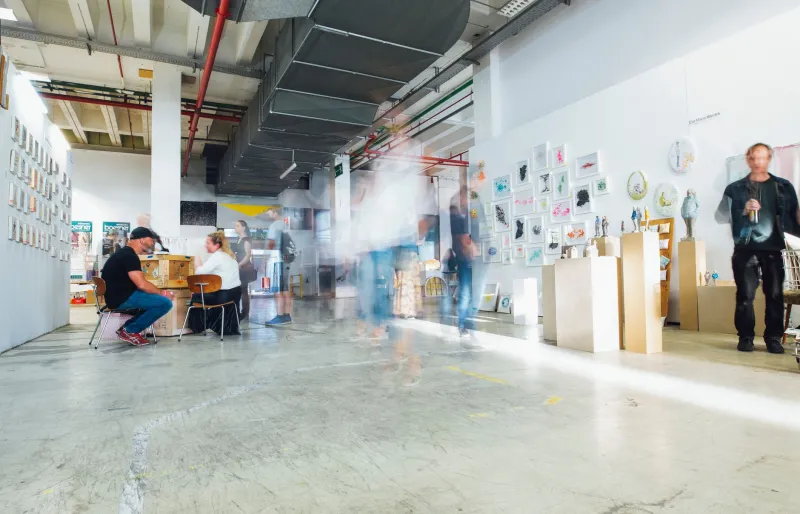
Mess in Progress: Why the Smartest Creative Communities Put Their Failures on Display
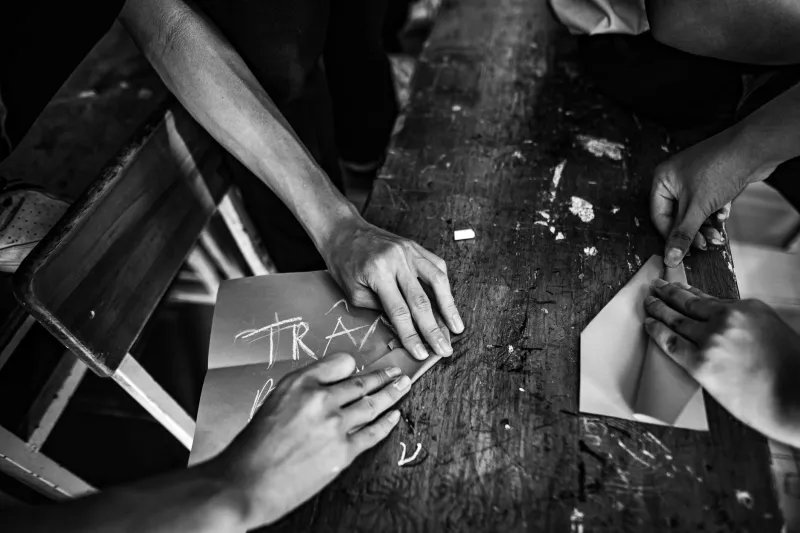
There's a certain kind of origin story we've all been fed. The artist who just knew, who hustled without stumbling, who landed the grant on the first try and sold out the show before the posters were even dry. It's a great story. It's also, almost always, a lie of omission.
The real story — the one that actually helps people — usually involves a pitch that got laughed out of the room, a collaboration that imploded spectacularly, and at least one creative project that cost more than it made and taught everything worth knowing. The most vibrant creative communities in America have figured this out. And instead of hiding that stuff, they're putting it in the curriculum.
The Myth of the Clean Comeback
We are, culturally speaking, obsessed with the pivot. The redemption arc. The moment where the failure becomes the foundation. But we tend to skip over the actual failure part — the confusion, the embarrassment, the period where nobody knew what came next. That skip is where emerging creators get lost.
When a young artist looks at an established collective and only sees the polished output — the finished mural, the funded residency, the festival slot — they're essentially getting directions without a map. They know where you ended up. They have no idea what roads you took or which ones turned into dead ends at two in the morning.
The communities doing the most interesting work right now are the ones actively filling in that gap. Not with cautionary tales delivered from a podium, but with real-time, ongoing, sometimes uncomfortable documentation of what it actually looks like to build something creative and not always get it right.
Learning Out Loud Isn't Just Brave — It's Strategic
Take the practice of what some collectives are calling "failure forums" — informal gatherings where members don't share wins, they share wrecks. A zine that nobody bought. A grant application that missed the mark by a mile. A community event that drew eleven people, three of whom were related to the organizer.
What happens in those rooms is something closer to mentorship than any formal workshop. Because the person sharing the story is still in the community. They're still making work. And the implicit message is: this happened, and I'm still here, and here's what I learned.
That's not just vulnerability for its own sake. It's a curriculum. It's telling the next wave of creators that the path isn't linear, that rejection doesn't mean stop, and that the gap between your taste and your ability — as Ira Glass famously described it — is something you work through, not around.
Some organizations have taken this even further by publishing their rejected grant proposals alongside the ones that got funded. It sounds counterintuitive until you realize what it does: it demystifies the process, shows the language that didn't land, and gives emerging artists a realistic picture of the odds without discouraging them from playing.
The Accidental Curriculum
Nobody planned for this to become mentorship. That's kind of the point.
In a lot of cases, the communities that have normalized public learning-in-progress didn't set out to build a mentorship model. They just got tired of pretending. A collective would post an honest recap of why a project fell apart, and the response from emerging artists in their orbit was overwhelming — not pity, but relief. Oh, that happens to you too? I thought it was just me.
That moment of recognition is worth more than a dozen polished panels at a professional development conference. It says: the struggle isn't a sign that you don't belong. It's a sign that you're doing the actual work.
Some of the most generative spaces for this kind of learning have emerged in unexpected corners of the internet — Discord servers for local arts scenes, Instagram accounts that document process over product, newsletters that include a "what didn't work this month" section right alongside the announcements. The format almost doesn't matter. What matters is the commitment to showing the seams.
When the Mistake Becomes the Method
There's something worth naming here about who benefits most from this kind of openness, and it's not who you might expect. Yes, newer artists gain enormously from seeing that established creators stumble. But the communities doing the sharing often report that the practice changes them too.
When you commit to documenting your process honestly — including the parts that didn't work — you start to notice patterns in your own failures. The grant applications that got rejected for the same vague language. The events that underperformed because the outreach was an afterthought. The collaborations that fell apart for the same interpersonal reasons, twice.
Public accountability, it turns out, is also just accountability. And for creative organizations that don't have a board breathing down their necks or quarterly reviews to prep for, that kind of self-imposed rigor can be genuinely transformative.
The Courage to Be Unfinished
None of this is easy. There's a real tension between transparency and the need to maintain credibility, attract funding, and hold space for the people who are already in your community. Not every failure is ready to be shared publicly. Not every dead end needs to be documented.
But the communities that are getting this right seem to understand the difference between oversharing and generosity. It's not about performing vulnerability or mining your worst moments for content. It's about asking, genuinely: what would have helped me, when I was starting out, that nobody told me?
The answer, almost universally, is this: the truth. Not the polished version. Not the origin story with all the doubt edited out. The actual, messy, still-in-progress truth of what it looks like to build something creative in a world that doesn't always make space for it.
That truth is a gift. And the communities brave enough to give it away are quietly doing some of the most important mentorship work in America — whether they call it that or not.
Start Somewhere Uncomfortable
If you're part of a creative community and you're reading this thinking, yeah, but we're not ready for that level of openness — fair. Start small. Share one thing that didn't go as planned in your next newsletter. Host one conversation where the only rule is that nobody shares a success story. Post one behind-the-scenes look at a project that's still figuring itself out.
See what happens. Chances are, someone in your orbit will say exactly what you needed to hear when you were starting out: oh thank god, me too.
That's how the curriculum gets written. Not in a classroom, not in a polished retrospective, but in the ongoing, generous, gloriously unfinished act of learning out loud.