Don't Blow It: What Happens When Your Beloved DIY Art Space Actually Takes Off
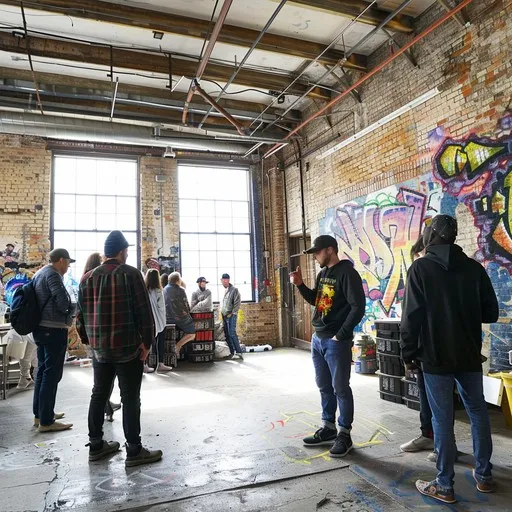
Photo: small indie arts venue crowd intimate community gathering urban space, via images.stockcake.com
For five years, The Meridian was the best-kept secret in Austin. A converted warehouse space hosting experimental theater, live music, and the occasional very chaotic art installation, it operated on a shoestring, a prayer, and the collective labor of about thirty dedicated volunteers. Then a major lifestyle publication wrote it up as "Austin's hippest underground venue" and everything changed. Within six months, ticket prices had doubled, two of the founding members had quit, and the regulars who'd helped build the place were getting turned away at the door on sold-out nights.
"We got exactly what we thought we wanted," says co-founder Alejandro Cruz, who left The Meridian in 2022. "And it broke us."
This is the second act problem — and it's more common than anyone likes to admit.
The Growth Trap
Independent creative spaces occupy a strange position in American culture. They're celebrated for being authentic and community-rooted, which is precisely what makes them attractive to the larger audiences and funders who eventually threaten to transform them into something unrecognizable. It's a paradox baked into the whole enterprise.
The pressure points are predictable: rising real estate costs in neighborhoods made desirable partly by the creative energy those spaces generated. Funders and donors who come with expectations about programming, reporting, and "impact metrics." New audiences who discovered the space through media coverage and don't share the context of the original community. Staff burnout as volunteer-run operations try to professionalize without the resources to do it properly.
None of these challenges are unique to arts spaces, but the stakes feel particularly sharp when the thing at risk is a community's sense of itself.
Scaling Down to Save the Dream
Not every organization responds to success by trying to grow into it. Some of the most instructive stories are about deliberate contraction.
The Listening Room, a folk and acoustic music collective in Asheville, North Carolina, spent its first four years hosting intimate house concerts for crowds of 20 to 30 people. When word spread and demand grew, founder Elena Marsh faced a choice: find a bigger venue and serve more people, or protect the format that made the experience special.
She chose the format. Sort of.
"We didn't scale up," she explains. "We scaled sideways. Instead of one big Listening Room, we trained a dozen hosts across the city to run their own versions. Same ethos, same guidelines, totally decentralized."
The result is a constellation of intimate concerts happening monthly across Asheville, each with its own personality but connected by a shared set of values. Total attendance across all events dwarfs what a single larger venue would offer. And crucially, each event still feels like the original thing — because structurally, it still is.
When the Mission Drifts
Mission drift is sneakier than a rent hike. It happens in small decisions that each seem reasonable at the time: booking a more commercial act because they'll sell tickets, accepting a corporate sponsorship that comes with branding requirements, pivoting programming to chase a grant opportunity that doesn't quite fit.
"You don't notice it happening until you look up one day and realize you're running a different organization," says DeShawn Okafor, executive director of Groundwork Arts Center in Detroit. Groundwork started as a youth-focused community mural program and, over a decade of growth, accumulated a gallery space, a digital media lab, and an annual festival. The programming is excellent. The budget is healthy. And Okafor spends a lot of time thinking about whether they've stayed true to what they set out to do.
"We still serve young people," he says carefully. "But we used to be run by young people. That's a meaningful difference."
Groundwork is in the middle of a deliberate restructuring to restore youth leadership to the organization's core — not just as beneficiaries but as decision-makers. It's slow, complicated work. "Rebuilding trust with a community you've drifted from is harder than building it in the first place," Okafor acknowledges. "They've seen you change. You have to prove you mean it."
The Intimacy Equation
What most people mourn when a beloved creative space changes isn't any specific program or feature — it's the feeling of being known. The bartender who remembered your name. The founders who were at every event. The sense that this place existed because a specific group of people cared about a specific thing, and you were part of that group.
Scale almost inevitably erodes that feeling, but it doesn't have to destroy it entirely. The organizations navigating growth most successfully are the ones that engineer intimacy back into their structures even as they expand.
At the Waypoint Arts Collective in Philadelphia, executive director Simone Tran has built what she calls "concentric circles" of membership — a tiered model where the innermost circle of founding and long-term members retains privileged access to programming, governance input, and the founders themselves. New audiences are welcomed warmly into the outer circles but understand that the community has a core they're working toward, not inheriting automatically.
"It sounds exclusionary when I describe it," Tran admits. "But it's actually the opposite. It tells people: there's something real here to belong to. Here's how you become part of it."
Practical Wisdom for the Second Act
After talking to a dozen-plus community arts leaders across the country, a few principles kept surfacing:
Name your values before you need them. The organizations that navigate growth best are the ones that articulated what they were protecting before they were under pressure to compromise it. A written set of values isn't a bureaucratic exercise — it's a reference point for hard conversations.
Protect the relationships, not the format. The specific programming that made a space special can evolve. The relationships — with founding community members, with the neighborhood, with the artists who came up through the space — are what actually need protecting.
Say no to money you can't afford. Counterintuitive but real: funding that comes with mission-distorting strings attached can cost more than it's worth. The organizations that have maintained their integrity longest are often the ones that have been most selective about their funders.
Keep the founders visible. When the people who built something disappear into administrative roles, the community loses its connective tissue. Find ways to keep founders present and accessible, even as the organization grows.
The Thing Worth Protecting
The Meridian in Austin eventually found its footing — though not in the way anyone expected. After the split, a smaller group of original members relaunched in a different space, deliberately unpublicized, with a strict capacity limit and a back-to-basics programming philosophy. It's not what The Meridian was at its peak. But Alejandro Cruz, who rejoined the effort, says it feels like what it was supposed to be.
"Success almost killed us," he says. "Starting over saved us."
Not every community gets a second chance at its second act. The ones that do are usually the ones that figured out what they were actually protecting — and held onto it, even when the whole world was telling them to let go.