Gloriously Unpolished: Why the Best Creative Communities Refuse to Grow Up

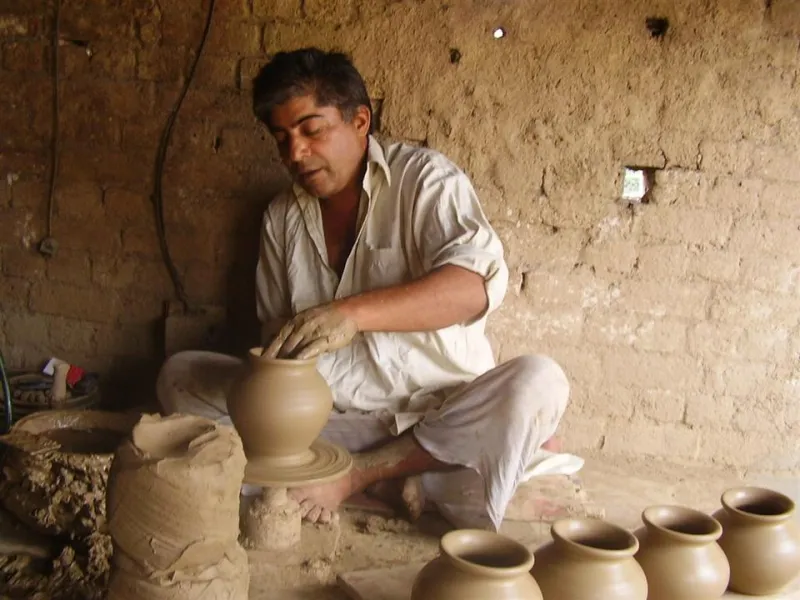
Photo: Holger Krisp, CC BY 3.0, via Wikimedia Commons
Somewhere in a church basement in Columbus, Ohio, a woman named Diane is singing the wrong note. Not slightly wrong — dramatically, confidently, gloriously wrong. And the twelve other people around her are laughing too hard to care. Nobody's recording it. Nobody's posting it. It's just Tuesday.
This is what a thriving creative community looks like, and it looks nothing like what we've been told it should.
The Professionalism Trap
We live in an era of relentless optimization. Instagram turned hobbies into side hustles. YouTube turned side hustles into personal brands. Somewhere along the way, the idea of making something just because it feels good got buried under a pile of monetization strategies and follower counts.
The pressure seeps into community spaces too. A neighborhood writing circle starts talking about submitting to literary journals. A backyard music collective books a real gig. A pottery studio begins pricing its pieces. None of these things are bad on their own — but the moment a creative community starts measuring itself against professional standards, something almost always shifts. The vibe changes. The stakes feel higher. And the people who came for the joy quietly stop coming.
"We lost half our regulars the year we tried to do a 'real' gallery show," says Marcus Webb, who co-founded a painting collective in Portland, Oregon called Brushwork Weird. "People who had been showing up every week for two years just... disappeared. I think they felt like suddenly it wasn't for them anymore."
Marker Webb eventually scrapped the gallery ambitions and went back to what he calls "aggressively unpretentious" meetups — themed painting nights, collaborative murals, the occasional chaotic paint fight. Attendance bounced back within a month.
What Amateur Actually Means
Here's a reframe worth sitting with: the word "amateur" comes from the Latin amator, meaning lover. An amateur does something for love. That's not a consolation prize. That's the whole point.
In Tucson, a community writing circle called The Rough Draft Club has been meeting monthly for six years with a single founding rule: nothing you bring can be finished. No polished pieces, no previously workshopped drafts. Fragments, first attempts, half-baked ideas only. "We wanted to make it structurally impossible to perform," explains founder Yolanda Reyes. "If your stuff has to be rough, nobody can show off. Everybody's just... there."
The Rough Draft Club now has a waitlist. Which is ironic, and also kind of perfect.
This is the paradox that keeps showing up: the communities that try hardest to be accessible and low-stakes end up being the most magnetic. They attract people who've always wanted to write, or paint, or play music but were scared of being judged. They become genuinely diverse — in age, background, skill level — in ways that curated professional spaces often aren't.
The Monetization Question
Let's be real: money is not the enemy. Spaces cost money. Materials cost money. People's time is worth compensating. The question isn't whether to think about sustainability — it's whether the pursuit of revenue starts warping the original mission.
Take the Hive Ceramic Studio in Minneapolis. They charge a modest monthly membership, run beginner workshops, and sell a small selection of member work in a corner of their space. Co-founder Priya Nair is thoughtful about the boundaries they've set. "We decided early on that the studio would never feel like a retail operation," she says. "The work for sale is secondary. If someone walks in and feels like they're in a store, we've failed."
The Hive has stayed deliberately small — capped at 40 members — and turned down grant opportunities that came with reporting requirements they felt would shift their focus. It's a choice that limits their reach but protects their culture. "We're not trying to serve everyone," Nair says. "We're trying to serve our people really well."
Not every community can afford that kind of restraint, and that's worth acknowledging. But the principle holds: growth for its own sake is a trap. The communities that last are usually the ones that got clear early on about what they were protecting.
Permission to Be Bad
One of the most underrated things a creative community can offer is explicit, enthusiastic permission to be bad at things. Not as a stepping stone to getting good — as an end in itself.
In Brooklyn, a monthly event called Terrible Talent Show has been running for three years. The concept is exactly what it sounds like: performers are encouraged to attempt things they are definitively not good at. Comedians do magic. Musicians attempt poetry. A retired accountant has done an interpretive dance to Fleetwood Mac four times. The crowd is raucous and kind in equal measure.
"The thing that surprised me," says organizer Tasha Moreau, "is how many people cry. Not from embarrassment — from relief. Like, oh, I can just try something and it can be bad and everyone will still cheer for me."
That emotional release is not a small thing. In a culture that commodifies everything and judges relentlessly, spaces that offer genuine safety — not performed safety, but the real thing — are doing something quietly radical.
The Two-Os Principle
At TwoOsTwo, we talk a lot about where creativity meets community. And the truth is, that intersection is rarely glamorous. It's potluck dinners and folding chairs. It's someone's garage. It's a group text that somehow turned into a monthly meetup that somehow turned into the thing you look forward to most all week.
The communities getting this right aren't trying to look like anything. They're too busy actually doing the thing. The clay is on Diane's hands. The wrong note is still ringing. And everyone's laughing, and it's Tuesday, and it's enough.
Maybe it's more than enough. Maybe it's the whole point.