Ghost Towns With Good Bones: Diagnosing the Death of a Local Arts Scene — and the People Bringing It Back to Life
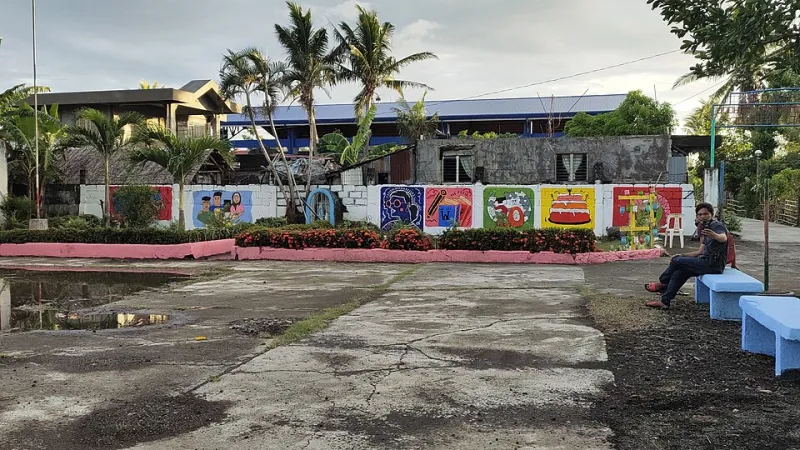
Photo: Irvin Parco Sto. Tomas, CC BY-SA 4.0, via Wikimedia Commons
Something happened to your city's creative scene. Maybe it was slow — a beloved venue closing here, a rent hike there — or maybe it felt sudden, like one day the murals were fresh and the next the coffee shop that hosted open mics was a smoothie franchise. Either way, the creative pulse dimmed. And if you've been paying attention, you probably have a few suspects in mind.
You're probably right about all of them.
The Anatomy of a Creative Collapse
Mid-sized American cities — the Richmonds, the Buffalos, the Chattanoogas, the Tucsonians — tend to follow a recognizable pattern when their arts scenes unravel. It rarely happens because people stopped caring about art. It happens because the physical and economic infrastructure that supports creative life quietly erodes beneath everyone's feet.
Step one is usually real estate. An arts district forms organically in a neighborhood where rents are low enough for artists to afford studio space and landlords are desperate enough to rent to anyone. The neighborhood gets interesting. The neighborhood gets press. The neighborhood gets desirable. Rents rise. Artists leave. What remains is the aesthetic — the exposed brick, the curated vintage feel — without the people who created it.
This is not a new story. It has played out in New York's SoHo, in Chicago's Pilsen, in Atlanta's Old Fourth Ward. But it's accelerating in smaller cities that don't have the cultural mass to absorb the losses.
Step two is brain drain. Young creatives — the ones who might have stayed and built something — look at the housing costs, the lack of institutional support, and the shrinking number of venues, and they leave for larger metros. Or they leave for the internet. The ones who remain often do so at significant personal cost.
Step three is institutional consolidation. Arts funding in mid-sized cities tends to concentrate around a handful of established organizations — the symphony, the art museum, the regional theater — which are better positioned to compete for grants and corporate sponsorships. Meanwhile, the scrappy experimental spaces, the DIY venues, the community-run galleries that actually incubate new work, get squeezed out of the funding ecosystem entirely.
By the time a city realizes its creative scene is gone, the conditions that made it possible have been gone for years.
What a Dead Scene Actually Looks Like
Talk to artists in Youngstown, Ohio — a city that has been in economic freefall since the steel industry collapsed — and they'll describe a creative ecosystem that has been rebuilt almost entirely through stubbornness and community will. But they'll also describe what the absence of infrastructure actually feels like on the ground.
"There's no middle layer," explained one muralist who has lived and worked in Youngstown for over a decade. "You have the big institutions that have been there forever, and you have individual artists doing their thing in their apartments. Everything in between — the venues, the residencies, the collaborative spaces — that's what's missing. That's where scenes actually form."
The "missing middle" is a concept urban planners use to describe housing stock, but it applies just as accurately to creative infrastructure. A healthy arts ecosystem needs more than anchor institutions and individual practitioners. It needs the informal spaces in between: the community darkroom, the shared rehearsal studio, the gallery that also functions as a neighborhood living room.
The Rebuilders: Case Studies in Creative Revival
The good news — and there is genuine good news here — is that communities across the country are finding ways to rebuild that missing middle, often with limited resources and enormous amounts of collective energy.
In Knoxville, Tennessee, a coalition of artists, local business owners, and neighborhood residents organized around a single vacant building in 2019 and turned it into a rotating creative hub that now hosts studio space, performance events, and a monthly market. The key wasn't grant funding — it was a negotiated lease arrangement with a sympathetic property owner who agreed to below-market rent in exchange for community programming that activated the space.
"We stopped waiting for someone to come save the scene," said one of the coalition's founding organizers. "We just started treating the space like it was already ours and figured out the paperwork later."
In Lansing, Michigan, a group of artists launched a "Cultural Cartography" project — essentially a living, crowd-sourced map of every creative resource in the city, from formal institutions to someone's basement recording studio. The project surfaced dozens of resources that residents didn't know existed and created a connective tissue between isolated practitioners who had no idea they were neighbors.
And in Providence, Rhode Island — a city with a long history of creative community building — a coalition successfully lobbied the city council to establish an Artist Live/Work zoning designation that protects affordable studio space in specific neighborhoods from market-rate conversion. It took four years and a lot of showing up to meetings, but it created a structural protection that no amount of community goodwill alone could provide.
What Actually Works (And What Doesn't)
After talking to organizers in a dozen cities, a few patterns emerge around what genuinely moves the needle on creative revitalization.
Relationship-first organizing beats programming-first organizing every time. Communities that start by building trust between artists, residents, and local institutions — before launching any specific initiative — tend to build things that last. Communities that start with a splashy event or a new venue and hope the relationships form around it tend to see those initiatives collapse within two or three years.
Policy matters as much as programming. Zoning, small business grants, cultural district designations, city arts budgets — these structural levers have more long-term impact than any single event or venue. Organizers who engage with local government, even when it's slow and frustrating, tend to create more durable change.
The goal isn't to recreate what was lost. The cities that revitalize most successfully aren't trying to rebuild a specific past scene. They're building something new that responds to who actually lives there now — which often means centering artists and communities that were marginalized even during the scene's supposed golden era.
Your city's creative scene isn't dead. It's dormant, or it's fragmented, or it's waiting for someone to show up and start connecting the dots. The people doing that work are everywhere, mostly unpaid, usually exhausted, and almost always worth finding.
Go find them.
Is your city doing something interesting to rebuild its creative community? We want to hear about it. Reach out at twoostwo.org.