You Escaped the Gatekeepers — So Why Does Your Art Space Have One Now?
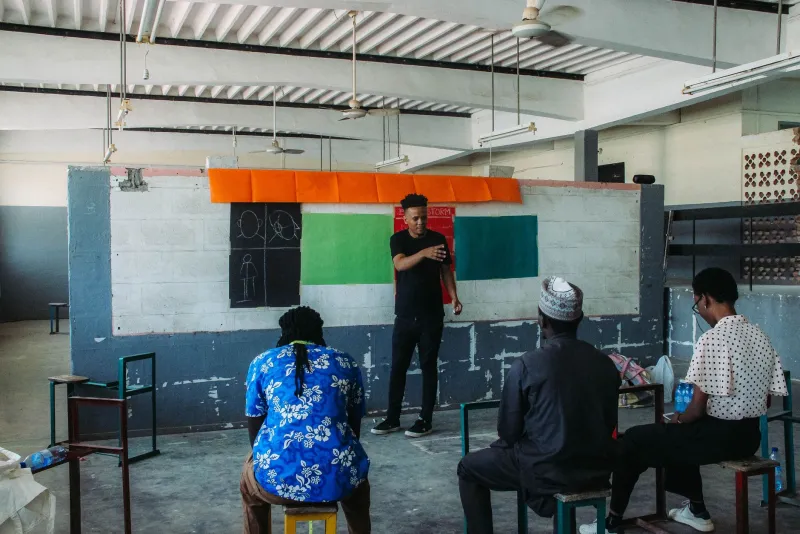
There's a specific kind of irony that haunts a lot of DIY creative spaces in this country. A handful of artists — fed up with MFA gatekeeping, gallery politics, or the velvet-rope culture of whatever scene they came from — decide to build something different. Something flat, open, radically welcoming. They rent a warehouse in a mid-size city, staple a manifesto to the door, and swear that here, everyone gets a seat at the table.
Five years later, there's still a table. But certain people are always at the head of it.
This isn't a story about bad intentions. It's a story about how power fills a vacuum — quietly, gradually, and often wearing the very generous face of mentorship.
The Mentor Who Became the Mayor
Ask anyone who's spent time in a scrappy artist collective and they'll know the archetype: the person who's been there since the beginning, who knows where the good spray paint is stored, who remembers why that particular rule exists, who gets CC'd on every email even when nobody's sure why anymore. They didn't seize power. They accumulated it, one helpful conversation at a time.
Mentorship is supposed to be one of the most generous acts in a creative community. And it genuinely can be. But there's a version of it that functions less like teaching and more like gatekeeping with a warm smile. When a newer member's idea has to survive the quiet, loaded question — "Have you talked to [name] about this?" — before it can move forward, that's not mentorship. That's a toll booth.
This pattern shows up in theater troupes, zine collectives, community muralism projects, and independent music venues from Portland to Pittsburgh. The founding generation doesn't mean to become the establishment. But creative spaces, like water, tend to find the shape of whatever container they're poured into — and if that container was built by humans, it usually has a hierarchy baked in somewhere.
Why Good Intentions Aren't Enough
The problem with relying on goodwill to prevent power consolidation is that goodwill is invisible and inconsistent. Someone can genuinely believe they're being a generous mentor while simultaneously making every newer member feel like they need permission to exist.
A lot of this comes down to how knowledge gets hoarded — not maliciously, but structurally. In communities that don't deliberately rotate skill-sharing, institutional knowledge pools around whoever has been there longest. And institutional knowledge is power. The person who knows how to work the sound board, who has the landlord's number, who understands the grant application process — that person becomes indispensable. And indispensable people, however lovely, become difficult to question.
The Chicago-based performance collective Collaboraction spent years reckoning publicly with exactly this dynamic. Their answer wasn't to tear down their experienced artists but to build formal systems that distributed knowledge before it could calcify into authority. Cross-training. Documentation. Rotating facilitation. Deliberately inviting newer members into decisions that "didn't concern them" — until it turned out they had the freshest perspective in the room.
What Intentional Structures Actually Look Like
The communities that break this cycle tend to share a few structural commitments that go way beyond vibes.
Rotating facilitation. Meetings aren't run by the same person every time. Leadership of specific projects rotates on a schedule, not based on who volunteers loudest. This sounds small until you realize how much of a group's culture gets shaped by whoever holds the mic.
Documented everything. When knowledge lives in one person's head, that person becomes load-bearing. When it lives in a shared Google Doc, a community wiki, or even a well-organized Discord channel, it becomes infrastructure anyone can access and build on. Several community arts organizations in cities like Detroit and New Orleans have moved to what they call "living handbooks" — documents that any member can update, and that get reviewed collectively every six months.
Explicit term limits on informal authority. This one's harder to enforce because informal authority doesn't come with a job title. But some collectives have gotten creative about it — creating explicit "emeritus" roles for founding members that honor their history without giving them veto power over new directions. The message: your legacy is real and we're not erasing it, but the future doesn't need your signature.
Structured reverse mentorship. A few artist collectives have flipped the traditional model entirely, pairing newer members with experienced ones specifically so the newer member does the teaching. Maybe they're bringing digital skills, connections to different communities, or just a perspective that hasn't been marinated in the group's assumptions. This isn't just a feel-good exercise — it actively redistributes who gets treated as a source of wisdom.
The Guilt Trip Nobody Talks About
Here's the part that makes this conversation hard: pointing out a power imbalance in a creative community often feels like attacking someone who's given a lot. And they probably have. The founding member who became the unofficial gatekeeper probably also built the website, organized the first fundraiser, and stayed up until 2 a.m. fixing the roof before the gallery opening.
So when someone newer tries to name the dynamic, they often get met with hurt feelings and a list of sacrifices. Which effectively silences the critique — not through authority, but through guilt.
The healthiest communities we've seen navigate this by separating two conversations that usually get tangled: gratitude for what someone contributed, and accountability for how current dynamics are functioning. You can genuinely celebrate a founding member's history and restructure how decisions get made. These aren't contradictory. In fact, doing both is probably the only way to honor what the space was built to be.
Staying Weird Requires Staying Honest
The whole point of building outside the mainstream creative institutions — outside the galleries, the conservatories, the publishing houses — is to make something that actually reflects different values. Flatter. More porous. Less about who you know and more about what you make.
But values don't maintain themselves. They need tending. And the most important thing a creative community can tend is its own honesty about where power lives and how it moves.
The good news is that catching yourself in this loop isn't failure. It's just the work — the same work every generation of artists has to do when they realize that the revolution has a tendency to develop its own aristocracy if you're not paying attention.
The communities that figure this out? They're not perfectly flat. Nobody is. But they're genuinely asking the question, out loud, on a regular basis: Who isn't in the room yet, and whose voice is being filtered through someone else before it gets heard?
That question, asked honestly and often, is probably the most radical thing a creative space can do.