No Boss, No Problem: How Leaderless Creative Collectives Are Getting More Done Than Anyone Expected
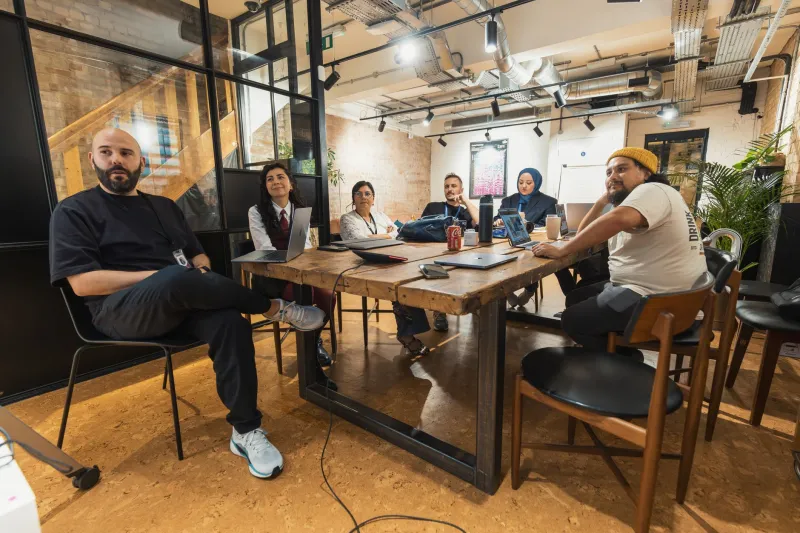
Here's a thing that sounds like it shouldn't work: a dozen artists sharing a warehouse studio in Detroit, making decisions by consensus, splitting resources by need, and running an annual public festival — all without a single person whose job it is to be in charge. No executive director. No lead artist. No one who gets the final say.
And yet, somehow, they're thriving.
This isn't a fluke. Across the country, creative collectives are quietly proving that the traditional top-down leadership model — the one that says every project needs a captain, every room needs a boss — isn't the only way to make things happen. In fact, for a lot of these groups, ditching the hierarchy entirely is exactly what set them free.
The Problem With Having a Leader
Let's be honest about something: most creative projects don't fall apart because nobody's in charge. They fall apart because one person is in charge, and that person burns out, checks out, or turns into a bottleneck that nothing can get through.
Artist collectives have been watching this happen for decades. A scrappy group forms around a shared vision. Someone naturally steps up. That person starts making more decisions. Everyone else starts deferring. The original energy — that electric, everyone-has-a-stake-in-this feeling — slowly drains away. Eventually the whole thing either collapses or calcifies into something that looks a lot more like a regular nonprofit than the community it started out as.
Horizontal structures are a direct response to that pattern. The idea isn't that there's no leadership — it's that leadership is distributed, rotated, and accountable to the whole group rather than concentrated in one person or a small inner circle.
What "Flat" Actually Looks Like in Practice
The word "horizontal" gets thrown around a lot, but what does it actually mean when you're trying to, say, book a venue or settle a dispute about whose mural goes on the south wall?
Collectives that make this work tend to share a few structural habits.
Rotating facilitation is one of the most common. Rather than having the same person run every meeting, groups assign a facilitator on a rotating basis — sometimes weekly, sometimes per project. This does two things: it prevents any one person from controlling the agenda, and it builds facilitation skills across the whole group so nobody's dependent on a single person's ability to run a room.
Consent-based decision making — sometimes called sociocracy — is another approach that's gained traction in creative communities. Unlike pure consensus (where everyone has to actively agree), consent-based models move forward when nobody has a serious objection. It's a subtle but important distinction. You don't have to love the plan. You just have to be able to live with it. This keeps projects moving without forcing artificial agreement.
Working groups with real autonomy are how larger collectives handle the sheer volume of decisions that need to get made. Instead of bringing every choice back to the full group — which is exhausting and slow — smaller working groups are trusted to make decisions within their domain. The mural committee decides the mural stuff. The events team handles the festival logistics. The finance circle manages the money. Full-group meetings are reserved for the decisions that genuinely affect everyone.
When It Gets Messy (Because It Always Gets Messy)
Nobody who actually runs a leaderless collective is going to tell you it's easy. The conflict that gets smoothed over in traditional hierarchies — where the boss just makes a call and everyone moves on — has to go somewhere in a flat structure. And sometimes it goes everywhere.
The collectives that survive this tend to have one thing in common: they talked about how they'd handle conflict before they were in the middle of it. Written agreements. Clear processes for raising concerns. Designated people — not leaders, but facilitators — who are trained in mediation and empowered to step in when things get heated.
One visual arts collective based in Philadelphia developed what they call a "temperature check" practice: at the start of every meeting, everyone rates how they're feeling on a scale of one to ten, and if too many people are running hot, the meeting gets rescheduled. It sounds almost absurdly simple, but it's prevented more blowups than any formal conflict resolution process they've tried.
The other thing that helps? Transparency about resources. Money is where flat structures most often crack. When people don't know how much is coming in, how it's being spent, or how decisions about allocation are made, resentment builds fast. The collectives that stay healthy tend to run open books — not just available to members who ask, but actively shared on a regular basis.
The Creativity Dividend
Here's the part that surprised us when we started reporting this piece: groups that operate horizontally don't just survive. A lot of them are doing genuinely innovative work that top-down organizations struggle to match.
Part of that is structural. When everyone has real stake in a project — not just a task assigned by someone above them — people bring more of themselves to it. The weird ideas get floated. The risky experiments get proposed. There's no manager to tell you that's not how we do things here, because there's no manager.
Part of it is also about whose voices get centered. Traditional creative hierarchies tend to reproduce the same biases as every other industry — the loudest, most confident, most well-connected people end up making the decisions, and everyone else adjusts to their vision. Horizontal structures, when they're working well, create actual space for the quieter voices, the newer members, the people who'd never volunteer to be in charge but have genuinely interesting things to say.
That's not just a feel-good outcome. It changes the work.
It's Not for Everyone, and That's Okay
Leaderless creative structures aren't a universal solution. Some projects genuinely need someone to make fast calls. Some communities don't have the bandwidth or resources to invest in the kind of process work that flat structures require. And some people — honestly — just do their best work when someone else is steering the ship.
But for the communities that are willing to put in the effort, the payoff is real. Not just in terms of the work they produce, but in terms of the culture they build — one where people stick around, where newcomers feel genuinely welcomed, and where the creative energy doesn't live or die based on whether one charismatic person is having a good year.
There's something quietly radical about a room full of artists who've decided that nobody gets to be more important than anyone else. It's messy, it's slow, and it requires a level of trust that doesn't come easy.
But when it works? It really works.
Want to connect with collectives experimenting with horizontal structures in your area? Check the TwoOsTwo community board — we keep a running list of groups looking for new collaborators.