Good While It Lasted: The Case for Letting Your Creative Partnership Die on Purpose
There's a particular kind of grief that creative people almost never talk about — the mourning that comes not from a collaboration falling apart, but from choosing to end one that still technically works. The project is fine. The relationship is fine. The output is... fine. And that word, fine, is exactly the problem.
Some of the most generative creative partnerships in American arts history didn't collapse. They concluded. On purpose. With intention. And often, the artists who walked away from those partnerships went on to make the most interesting work of their careers.
So why do we treat the end of a collaboration like a failure?
The Myth of the Forever Partnership
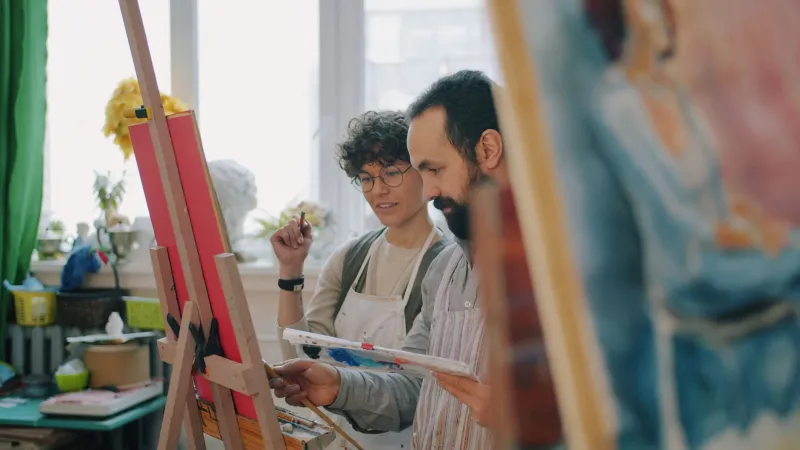
We love a good origin story. Two artists meet at an open mic in Bushwick, or a community mural project in East Austin, or some scrappy little zine fair in a church basement in Minneapolis. Something clicks. The work they make together is unlike anything either of them could have made alone. The scene around them buzzes.
And then — because we are a culture that loves a sequel — we expect them to keep going forever.
But creative chemistry is not a renewable resource. It's more like a specific atmospheric condition. The right pressure, the right temperature, the right two people at the right point in their development. When those conditions shift, as they inevitably do, the work often shifts too. Not always in a good direction.
Marcelline Okafor, a textile artist and co-founder of a fiber arts collective in Philadelphia, put it plainly when we talked to her last spring. "We made four years of work together that I'm genuinely proud of. And then I started to notice that we were making the same work. Not similar — the same. We were finishing each other's sentences before we even started them. That felt comfortable, but it wasn't generative anymore."
She and her collaborator dissolved the collective formally, threw a closing show, and toasted the whole run with cheap sparkling wine and a lot of tears. Within eighteen months, both had launched solo projects that looked nothing like what they'd made together. Both were nominated for regional arts grants. Neither regrets the ending.
Built-In Expiration Dates as a Creative Strategy
Here's the uncomfortable proposal: what if some collaborations should have end dates baked in from the beginning?
This isn't a new idea in performance and theater. Site-specific productions, pop-up installations, limited-run zines — these formats already acknowledge that a defined container can actually intensify the creative energy inside it. The deadline is not the enemy of the work. Sometimes it's the engine.
But we rarely apply that same logic to the partnerships themselves.
Diego Reyes runs a small arts nonprofit in Chicago that specifically structures its residency collaborations around what he calls "seasonal thinking." Artists come together for a defined cycle — usually a year — with the explicit understanding that the partnership has a natural close built in. They can choose to continue, but that choice has to be active and intentional, not just inertia.
"When people know there's an endpoint, two things happen," Reyes explains. "They stop taking the collaboration for granted, and they stop avoiding the hard conversations. Both of those things make the work better."
The model has attracted attention from creative communities across the Midwest who are tired of watching promising partnerships slowly suffocate under the weight of unspoken resentments and stale creative habits.
The Sunk Cost Trap in Creative Relationships
One of the biggest reasons artists stay in collaborations past their expiration date is the same reason people stay in bad investments: they've already put so much in. The years. The inside language. The shared aesthetic vocabulary. The audience that knows you as a unit.
But here's the thing about sunk costs — they don't become valuable just because you keep paying into them.
Jasmine Tran, a muralist and illustrator who spent five years co-running a design collective in Los Angeles, describes the slow erosion that can set in when a partnership continues past its natural peak. "We were protecting what we'd built instead of building something new. Every decision became about preserving the brand, the aesthetic, the reputation. We stopped taking risks because we had too much to lose."
She finally initiated a conversation about winding down after realizing she'd turned down three solo opportunities in one year because they didn't "fit" the collective's identity. "I was shrinking myself to protect something that had already kind of stopped growing."
The dissolution was messy for about six months. Then it wasn't. Her first solo show sold out.
What a Graceful Ending Actually Looks Like
Nobody is suggesting that creative partnerships should be treated as disposable or that the work of building trust and shared language doesn't matter. It absolutely does. The point is that honoring that work sometimes means letting it reach its natural conclusion rather than stretching it into a diminished version of itself.
A few things that artists and collectives we've spoken with point to as markers of a healthy, intentional ending:
The work gets a proper send-off. A closing show, a final publication, a documented archive. Something that says: this was real, this mattered, and now it's complete.
The conversation happens early, not in crisis. The best dissolutions we heard about started with honest conversations during a period of relative health, not after everything had already curdled.
Both people leave with something. Not just goodwill, but actual creative assets — skills, relationships, audiences, ways of working that they can carry forward independently.
The ending is celebrated, not just survived. This one's harder, but it matters. A collaboration that ends with mutual respect and a genuine acknowledgment of what it accomplished is a success story, not a cautionary tale.
The Longer Game
There's a version of artistic maturity that looks like longevity — the duo that's been making work together for thirty years, the collective that's survived multiple generations of members. That's real and worth celebrating.
But there's another version that looks like discernment. The artist who knows the difference between a partnership that's growing through friction and one that's just grinding down. The collaborator who loves what they made together enough to let it be finished.
At TwoOsTwo, we spend a lot of time thinking about what makes creative communities thrive. And one answer that keeps surfacing, in ways we didn't expect, is this: the health of a creative ecosystem depends not just on how well people come together, but on how gracefully they're allowed to move on.
The collaborations worth celebrating aren't always the ones that lasted forever. Sometimes the best ones are the ones that knew exactly when to take a bow.